Subterranean termites, powderpost beetles, and fungal organisms thrive beneath historic heart-pine and modern framing timbers when relative humidity routinely exceeds 70 percent. Standard broadcast surface spraying…
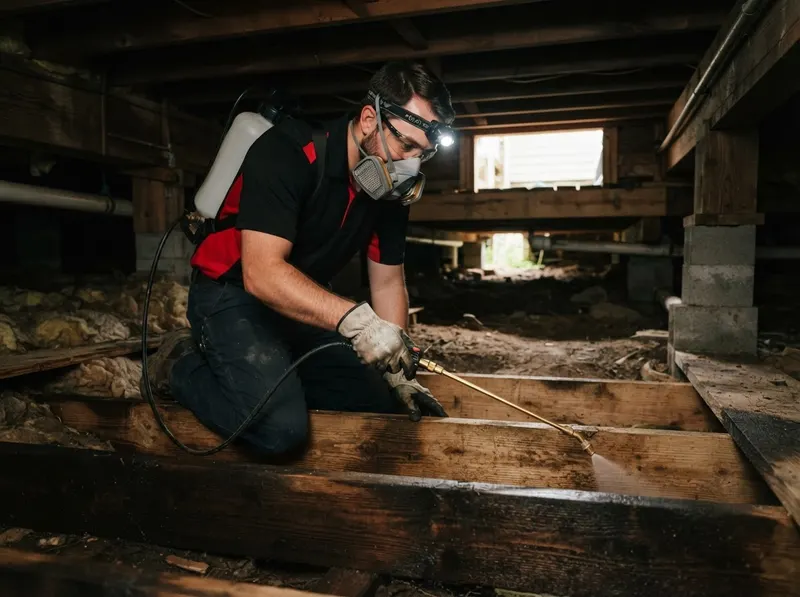
Subterranean termites, powderpost beetles, and fungal organisms thrive beneath historic heart-pine and modern framing timbers when relative humidity routinely exceeds 70 percent. Standard broadcast surface spraying fails because surface-level synthetic pyrethroids break down under high ground moisture and do not penetrate into cellular cellulose. EmberRoot Bug Removal executes subterranean nest disruption for Lowcountry homes by delivering water-soluble disodium octaborate tetrahydrate deep into structural timbers. Borate salts diffuse through wet wood fiber using the ambient moisture of coastal properties to establish a lasting mineral barrier. Because the treated cellulose becomes toxic and indigestible to cellulose-ingesting pests, wood-boring insects and rot-causing basidiomycete fungi are eradicated before structural degradation compromises load-bearing integrity.
Treatment protocol requires bare, unfinished wood surfaces with lumber moisture levels documented between 12 percent and 28 percent. Crawlspaces in Downtown Historic District properties, Harleston Village single houses, and South of Broad brick-pier residences frequently feature historic heart-pine floor assemblies adjacent to damp earth. In these tight clearance envelopes, field technicians clear loose fungal frass and dirt from framing members before applying dual pressurized coats of borate solution at 20 to 40 PSI. In modern encapsulated crawlspaces across Daniel Island, West Ashley, and Johns Island, application extends across perimeter sill plates, foundation rim joists, and subfloor sub-assemblies. The treatment dries odorless, produces no volatile organic compounds, and leaves an invisible mineral matrix that will not off-gas into residential living areas above.
Technical decision-making dictates when pure borate timber saturation fits versus supplemental exterior soil barriers. When subterranean termite swarms (Reticulitermes flavipes) or wood-boring powderpost beetles (Lyctinae) target structural wood directly above dirt or masonry piers, a penetrating borate application protects the wood from within. However, borate salts remain water-soluble; if ground standing water or active storm surges contact structural joists, the mineral can leach out over extended periods. Homes in flood-prone pockets near Wagener Terrace, Radcliffeborough, and tidal marsh interfaces on James Island require moisture remediation or crawlspace drainage mitigation before or alongside borate treatment. Homeowners weighing timber treatments versus liquid soil trenches must note the structural trade-off: soil applications target perimeter approach corridors, whereas direct wood mineral treatments permanently fortify the exact load-bearing cellulose against internal digestion. Work is executed to the technical structural standards of the American Wood Protection Association and guidelines established by the USDA Forest Products Laboratory.
Every job gets a firm, written price after a free on-site visit.
Tell us about your crawlspace borate wood treatment job in Charleston and we'll send a clear, written quote, usually the same day.
 EmberRoot Bug Removal